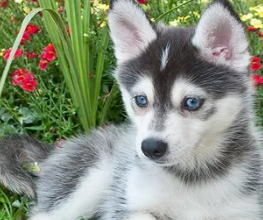
Growing up, the first (and only) dog I ever owned was a mix between a Pomeranian and a husky, also known as a pomsky. That being said, mixed breeds have been under scrutiny for quite some time now due to the various ethical concerns pertaining to the nature of them. To be completely honest, these are not unfounded and the nature of breeding dogs in this way is often more detrimental to both the health of the parents and the offspring more often than not. This practice can cause a variety of problems later in life, and while it is not uncommon for people to say that mixed breeds have a smaller chance of health issues than pure breeds, that is not completely true.
That being said, with the passing of my own dog last year, I want to dedicate this website to teaching others more about her and other dogs that are of a similar breed to her. With the variety of behavioral changes, health issues, and growth she had later in life, it makes me feel as though there is not enough information on the breed. My goal is to convey more information about pomskies to people that own them or are planning on buying one.
How pomskies look
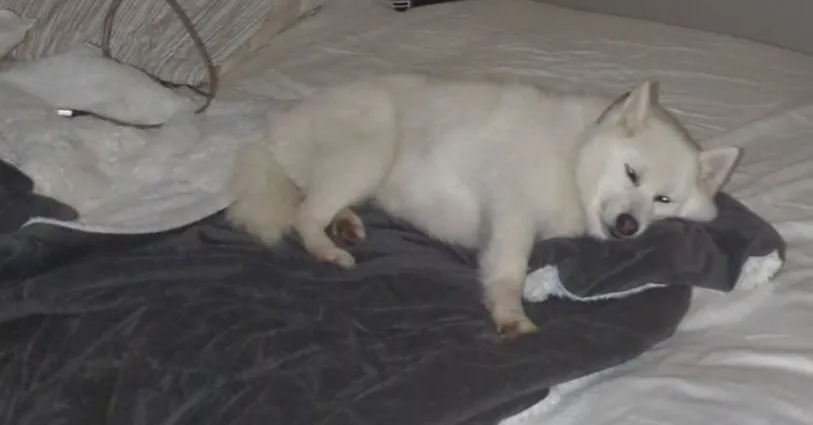
A picture of a 7 year old pomsky.
The dog pictured above is my dog when she was about 7 years old. She had went through quite a bit of growth in the first 1-2 years we had her, but after that point, she had stayed physically the exact same for the entirety of her life going forward. As you can see, she has quite a bit more in common with her husky heritage than she does with her Pomeranian side. This can be both a blessing and a curse due to the amount of fur that the breed can have, which can be a mess to deal with when shedding season comes around during the summer. The main common ground she has with other Pomeranians is her size.
Pomskies can be very hard to spot due to their similarities with other dog breeds. There have been multiple instances of my dog being confused for a Shiba Inu or an Alaskan Klee Kai. When she was younger, there was even more confusion about what breed she could’ve been due to her more Pomeranian features being more present. However, due to being a mixed breed, no 2 pomskies look the same and they tend to come in all shapes and sizes.
How they sound
While pomskies tend to look more like huskies than anything else, I would argue that the way they tend to sound is closer to their Pomeranian side. Pomeranians tend to be very vocal and high pitched, barking at any sudden change to their environment. This is how pomskies can tend to act as well, going from extremely calm to suddenly barking or crying at visitors or any sudden change to their environment. This can lead to them being very loud dogs, which can be a lot to deal with, especially if your pomsky has separation anxiety and tends to cry when learning to sleep by itself.
Above I have shared an audio file of a Pomeranian barking. The reason for this is because this is how pomskies tend to sound, especially when they are younger. These are the types of dogs that tend to bark for very long periods of time whenever something interesting or upsetting comes their way While this can be a handful at first to deal with, they usually do tend to calm down more with age like most dogs. As time goes on, you start to miss the little barking tangents they like to go on.
More fun facts
While this page is titled “fun” facts, I feel it best to share a bit of an unfun fact to start off with. It is hard to gauge a pomsky’s lifespan, especially due to it being a relatively new mixed breed. Health issues are sudden and very hard to predict, with the only common trait among them being bad teeth and potential issues regarding their trachea and overall quality of breathing. Despite this, pomskies can definitely live a long a fulfilling life, but it is best to keep in mind that you never know what may happen.
On a more positive note, a really notable trait about pomskies is that they tend to be very energetic and typically stay that way even when they are “past their prime” so to speak. As shown in the video above, they like to try to make themselves seem bigger than other dogs, even when the other dog is much bigger than they are. When playing with smaller dogs they tend to be more aggressive, but they always will “pull their punches” when handling smaller dogs, so to speak. Despite this, their favorite activity is provoking other dogs and then immediately running away.
Contact
Elements
Text
This is bold and this is strong. This is italic and this is emphasized.
This is superscript text and this is subscript text.
This is underlined and this is code: for (;;) { ... }. Finally, this is a link.
Heading Level 2
Heading Level 3
Heading Level 4
Heading Level 5
Heading Level 6
Blockquote
Fringilla nisl. Donec accumsan interdum nisi, quis tincidunt felis sagittis eget tempus euismod. Vestibulum ante ipsum primis in faucibus vestibulum. Blandit adipiscing eu felis iaculis volutpat ac adipiscing accumsan faucibus. Vestibulum ante ipsum primis in faucibus lorem ipsum dolor sit amet nullam adipiscing eu felis.
Preformatted
i = 0;

while (!deck.isInOrder()) {
    print 'Iteration ' + i;
    deck.shuffle();
    i++;
}

print 'It took ' + i + ' iterations to sort the deck.';